

Introduction
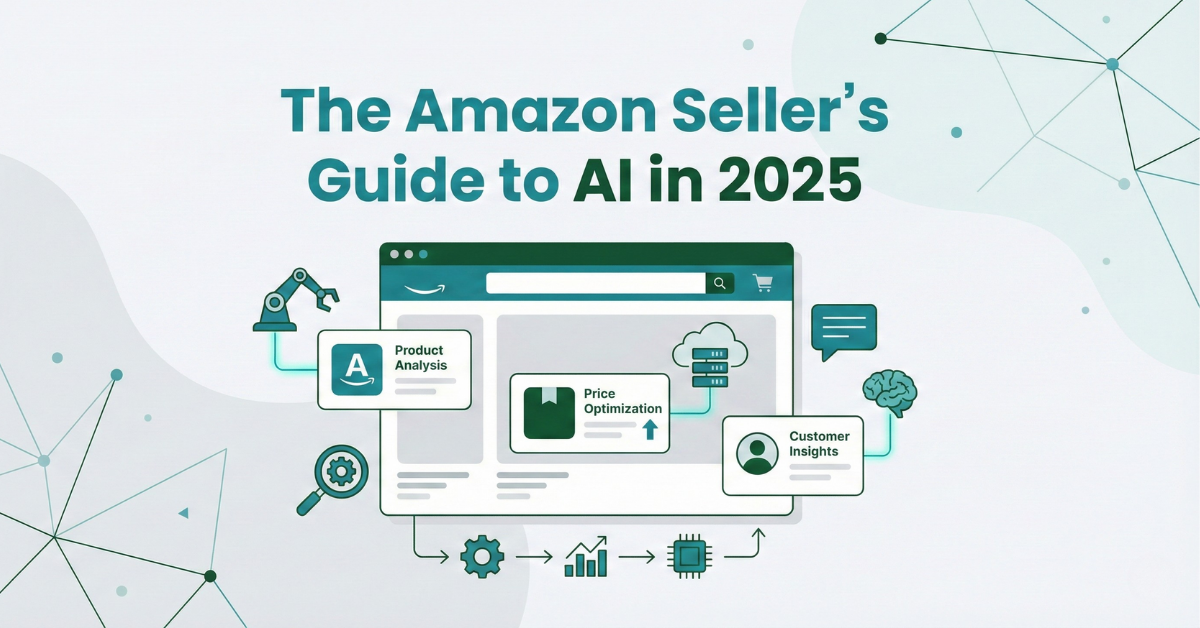
If you’re an Amazon seller in 2025, you’ve probably noticed how much harder it’s getting to stay competitive. Cost-per-click on ads is climbing, shoppers are using AI-driven assistants like Amazon’s Rufus to make buying decisions, and sellers who stick to manual processes are being left behind.
The truth is, AI isn’t just a buzzword anymore, it’s the backbone of how top-performing Amazon businesses run. From writing optimized listings to automating PPC bids, predicting inventory needs, or analyzing customer reviews at scale, AI tools are giving sellers an edge in efficiency and growth.
But here’s the challenge:
With so many new AI solutions out there, it’s tough to know where to start, or whether it’s smarter to DIY or hire expert help. That’s why we’ve put together this in-depth guide.
In this article, you’ll learn:
- How to use AI for Amazon product listings to improve SEO and conversion.
- The latest in Amazon PPC automation with AI and how to keep ad spend under control.
- Strategies for AI-powered Amazon repricing to win the Buy Box without killing margins.
- What Amazon’s Rufus AI shopping assistant means for your business in 2025.
By the end, you’ll have a clear roadmap for applying AI in your Amazon business, whether you want to implement tools yourself or work with a partner like Bits & Atoms for expert support.
How AI is Changing Amazon Marketing in 2025
AI has moved from optional to essential. In 2025, nearly every part of Amazon’s ecosystem (seller tools, buyer experience, and Amazon’s own platform features) has been reshaped by AI.
- Shoppers use AI to shop smarter.
Amazon Rufus and other generative AI search tools are changing how customers discover products. Instead of searching with short keywords, they’re asking full questions, and the AI assistant serves up products it considers relevant. That means your listings need to answer the questions customers are asking. - Amazon’s algorithms are more data-driven than ever.
Listings, ads, reviews, and even your fulfillment performance are being assessed by AI models. Sellers who provide rich, accurate data have a better chance of visibility and sales. - AI tools are democratizing seller success.
Whether you’re a new private-label brand or an established wholesaler, AI levels the playing field by giving you capabilities once reserved for large teams and agencies.
The bottom line: Amazon’s future is AI-first. Expect more agentic tools that reduce manual work (e.g., Seller Assistant taking actions with your approval) and creative systems that cut production time (e.g., Video Generator/Creative Agent). Sellers who embrace these will see faster launches, better visibility, and healthier margins.
How to Use AI for Amazon Product Listings
One of the biggest time drains for sellers is creating and maintaining optimized product listings. Titles, bullet points, descriptions, and backend keywords need to balance SEO with compelling copy.
In 2025, Amazon has made this easier with Amazon generative AI listing optimization tools like Enhance My Listing. These tools can:
- Generate keyword-rich titles, bullet points, and descriptions from just a product photo or short description
- Identify missing attributes (like size or material) and suggest adding them for better SEO
- Refresh outdated listings with current customer language and seasonal trends
For sellers, this means less time writing and more time selling. However, AI shouldn’t be left unchecked. Always:
- Fact-check and edit. AI may exaggerate claims or include inaccuracies.
- Add your brand voice. Listings optimized for algorithms also need to connect with humans.
- Include FAQs and use cases. Anticipate what shoppers (and Rufus) will ask.
👉 Need help beyond listings? Explore our Listing Optimization service for custom strategies tailored to your brand.
Amazon PPC Automation with AI
Advertising is where AI delivers some of the biggest returns for Amazon sellers. With CPCs rising, AI advertising tools for Amazon brands are helping sellers do more with less by automating bid strategies, keyword targeting, and even creative generation.
Here’s how sellers are using AI for PPC in 2025:
- Smart Bidding: AI algorithms adjust bids in real time based on conversion likelihood. Instead of manually tweaking, the system maximizes exposure where it matters and saves spend where it doesn’t.
- Automated Keyword Harvesting: Tools can analyze search term reports and automatically add high-performing keywords while pausing wasteful ones.
- Creative Generation: Amazon’s AI Creative Studio allows brands to generate product videos, lifestyle images, and audio scripts from a single product photo or detail page.
You can read more about it in Amazon’s official article.
In 2025, Amazon expanded Video Generator so brands can create multi-scene product videos from a PDP or a few images in minutes, and introduced Creative Agent, an agentic AI that concepts and assembles entire ad creatives, accelerating launches by reportedly cutting build time dramatically.
Practical advice:
- Always set clear ACoS or ROAS targets, AI will optimize toward whatever goals you give it.
- Review performance weekly. AI can make smart moves, but it still needs human oversight to align with your brand priorities.
AI-Powered Amazon Repricing Strategies
Winning the Buy Box often comes down to price. Manual repricing or rigid rule-based systems no longer cut it in 2025. AI-powered Amazon repricing strategies give sellers a smarter way to stay competitive without eroding margins.
How AI repricers work:
- Machine learning models analyze competitor pricing, sales velocity, and Buy Box dynamics.
- They adjust your price in real time, not just to undercut, but to balance sales volume and profitability.
- They can even raise prices strategically when competitors sell out, capturing higher margins.
Tips for using AI repricers effectively:
- Set minimum and maximum price limits to protect your margins and brand perception.
- Decide whether your goal is Buy Box dominance or profit maximization, the AI will optimize differently.
- Monitor performance during peak events (like Prime Day) when price swings can be extreme.
- If you use Amazon’s Automated Pricing alongside third-party AI repricers, align your floors/ceilings across tools to avoid oscillation or accidental price wars.
AI repricers can deliver double-digit sales lifts when used strategically. But without guardrails, they can cause price wars or volatility, so use them with care.
AI Review Analysis Tools for Amazon Sellers
Customer reviews are a goldmine of insights, but reading thousands of them manually isn’t practical. AI review analysis tools for Amazon sellers solve this by using natural language processing (NLP) to summarize, categorize, and extract trends.
What these tools can do:
- Highlight top positive and negative themes from reviews (e.g., “customers love the softness, but sizing runs small”).
- Provide sentiment analysis by percentage of positive/negative mentions.
- Spot fake or suspicious reviews that might skew ratings.
Pro Tip: Pair review analysis with A+ Content. If reviews highlight a feature customers love, emphasize it in your enhanced content to boost conversions.
As Amazon surfaces AI review summaries to shoppers more prominently, closing the loop on issues that show up in themes (and reflecting fixes in copy/A+ and images) can move conversion, not just ratings.
Amazon Rufus AI Shopping Assistant: What It Means for Sellers
Perhaps the most significant development for Amazon sellers in 2025 is Rufus, Amazon’s generative AI shopping assistant, now scaling internationally and tied to meaningful revenue impact within Amazon’s own forecasts.
For sellers, this changes the game:
- Listings need to be conversationally relevant. If Rufus can’t find the information it needs in your copy, your product won’t be recommended.
- Attributes matter more. Fill in every field, (size, materials, benefits—so Rufus has complete data to work with.
- Answer shopper questions proactively. Adding FAQ-style content to your listings or A+ content ensures Rufus can “see” your product as a match.
This isn’t just about SEO anymore, it’s about AI-readability. Think of Rufus as another customer, one that reads your listings word-for-word before deciding whether to recommend them.
Key Takeaway → Build AI-readable pages: answer common questions in bullets/A+, fill every attribute, and write in natural language so Rufus can confidently match your product to conversational queries.
FAQs
1. Can AI create my entire Amazon listing for me?
Yes, but it’s best to treat AI as a first draft. Always edit for accuracy, compliance, and brand voice before publishing.
2. Is AI advertising worth it for small sellers?
Absolutely. Even smaller sellers benefit from AI-powered bid automation and creative generation, which can stretch ad budgets further.
3. How does Amazon Rufus affect SEO?
Traditional keywords still matter, but Rufus relies on conversational language. Listings that anticipate shopper questions will perform best.
4. Should I DIY with AI or hire expert help?
It depends on your goals. DIY can work for smaller catalogs, but as you scale, working with an agency ensures strategy, compliance, and optimization are handled at a professional level.
5. What can Amazon’s Seller Assistant actually do?
It now uses agentic AI to reason about your account and propose actions (e.g., fix compliance items, open support cases). You approve the steps; it handles the busywork.
Conclusion
AI is no longer optional for Amazon sellers in 2025, it’s the foundation of smarter, more competitive businesses. From listings to ads, pricing, inventory, and reviews, AI tools free up your time and give you the insights needed to scale.
Want expert help applying these strategies to your brand?
Book a call with our team at Bits & Atoms and let’s turn AI into your growth advantage.